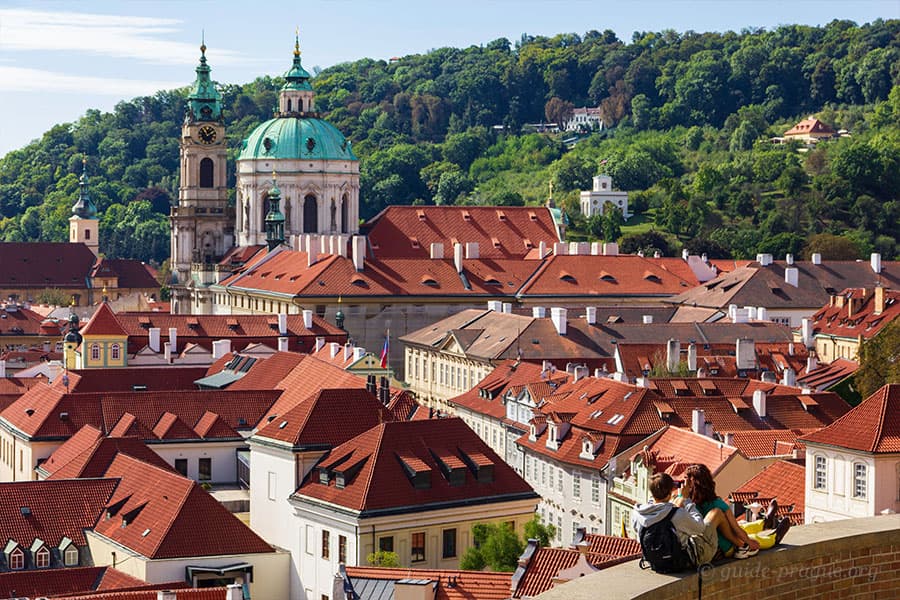
Malá Strana is the most romantic of Prague’s quarters, with narrow cobblestone streets, baroque churches, palace gardens, and red-tiled roofs. |
|
|
A settlement appeared on the left bank of the Vltava River not long after Prague Castle was founded. There were two fortresses nearby: the residence of the Knights of Malta and the Bishop's Court. The second disappeared among later buildings without a trace. But what remains of the first, although in a later Gothic appearance, can still be seen on Maltese Square (Maltézské náměstí) - the Church of Our Lady beneath the Chain. |
|---|---|
In 1257, King Přemysl Otakar II founded a royal town on the site of the earlier settlement. It got the name New Town under the Prague Castle. The name was quite long, and later it was changed to the Lesser Town. By order of the king, the walls surrounded the town. And the market became a center of local life. Today we know this place as Malostranska Square. |
|
The Lesser Town was almost destroyed during the Hussite Wars. Before it had time to recover, a new disaster struck. In 1541, a fire broke out on the Malostranska Square. As a result, two-thirds of the houses burned down, as well as part of Hradcany and Prague Castle. |
|
Today we see the town as it became in the 17th and 18th centuries when Baroque came to Prague. Churches, palaces, and houses were transformed by Baroque architecture. The church of St. Nicholas became one of the finest examples of this style. |
|
|
If you want to make the most of your visit to Prague, there are plenty of exciting activities and tours to explore the city’s history, architecture, and culture. From guided walking tours through the Old Town to boat trips along the Vltava River, you can discover hidden gems and iconic landmarks. Check out a curated selection of top Prague experiences on the GetYourGuide platform to plan an unforgettable trip. |
|