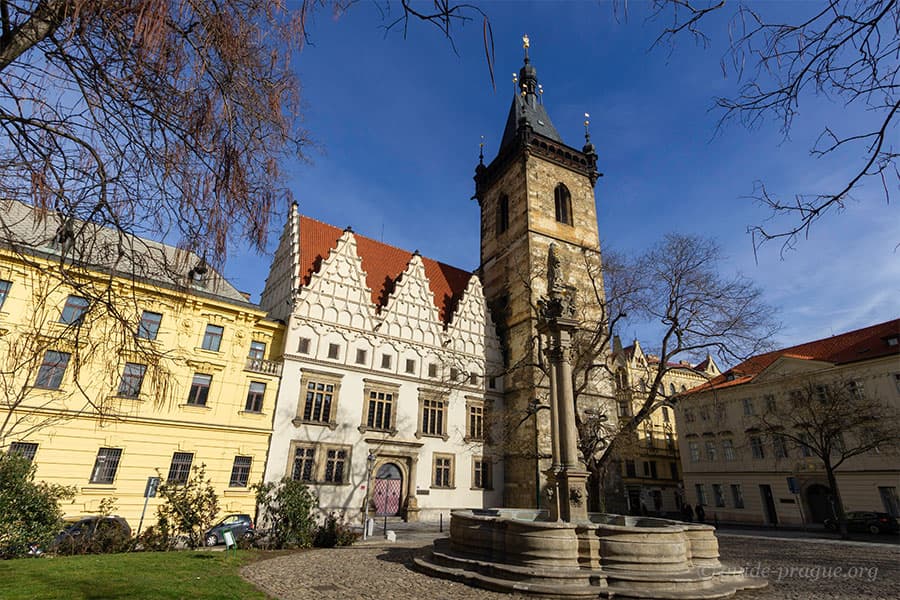
The New Town of Prague was founded in 1348 by King Charles IV. He bought plots of land in advance and resold them under several conditions. Anyone who purchased land was required to begin building a stone house within one month and complete construction within 18 months. These strict conditions were softened by a generous incentive: those who met them were exempt from taxes for 12 years. At the same time, defensive walls were constructed around the future city. Their construction was completed in just 2 years. |
|
|
The city was built according to a strict urban plan. The location of all streets and squares was known in advance. That is why the streets here run parallel and perpendicular to each other. There were, however, a few exceptions. And those are parts of the New Town that had already existed before its foundation: the surroundings of St. Peter's Church, St. Stephen's Church, and some streets near Vysehrad. |
|---|---|
Three squares were intended to become the main centers of public life in the New Town: the Cattle Market, Horse Market, and Hay Market. All these squares exist to this day, however, under new names: Karlova, Wenceslas, and Senovazne Square. It is remarkable that the size of these squares and the width of many streets in the New Town have remained unchanged since the 14th century. |
|
New Town was larger than Old Town, Hradcany and Lesser Town combined. After its foundation, Prague became one of the biggest cities in the world. Around 40,000 people lived here by 1378. |
|
|
If you want to make the most of your visit to Prague, there are plenty of exciting activities and tours to explore the city’s history, architecture, and culture. From guided walking tours through the Old Town to boat trips along the Vltava River, you can discover hidden gems and iconic landmarks. Check out a curated selection of top Prague experiences on the GetYourGuide platform to plan an unforgettable trip. |
|