|
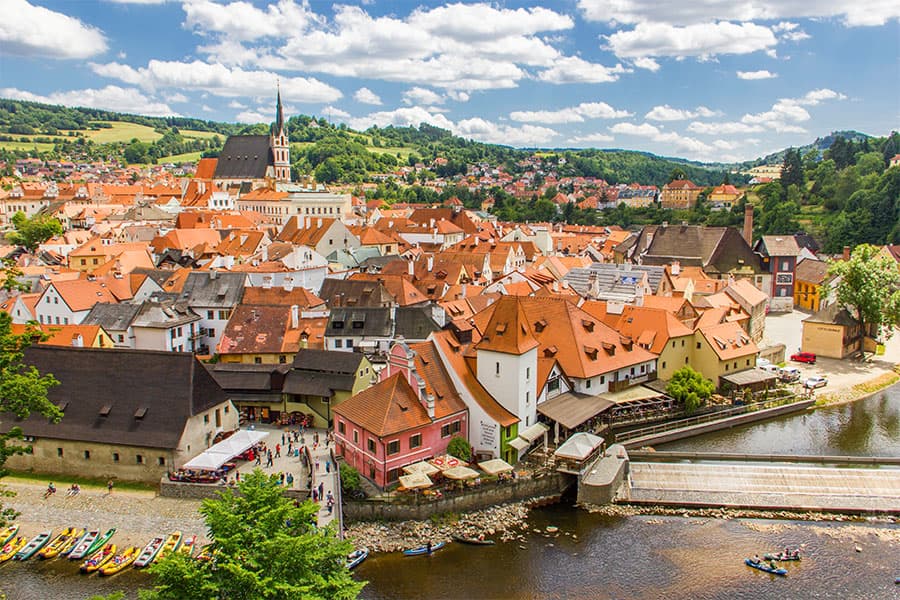
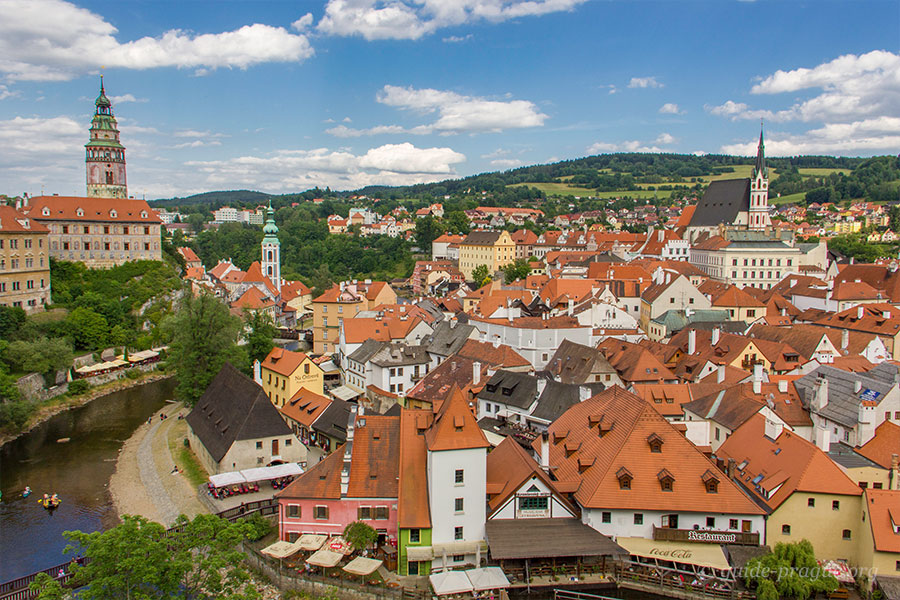
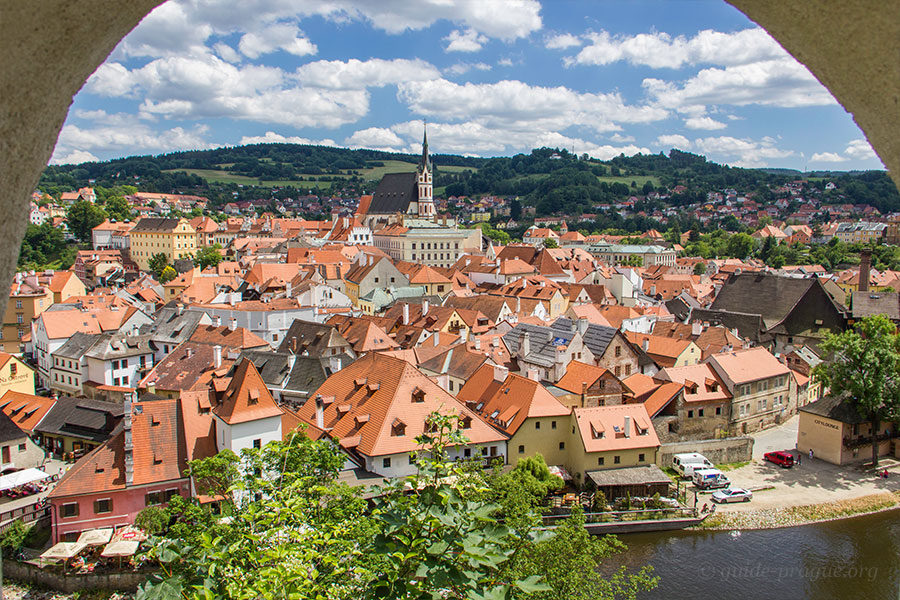
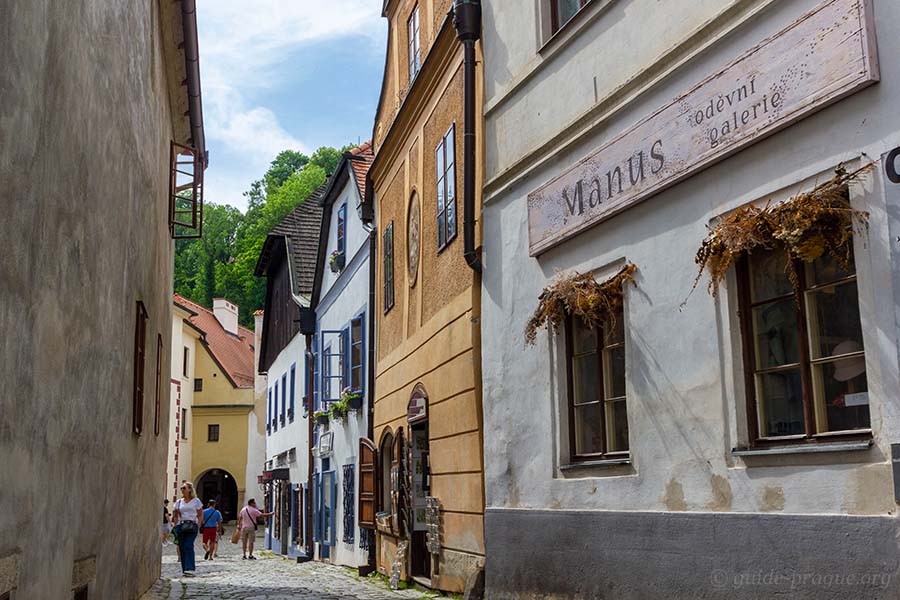
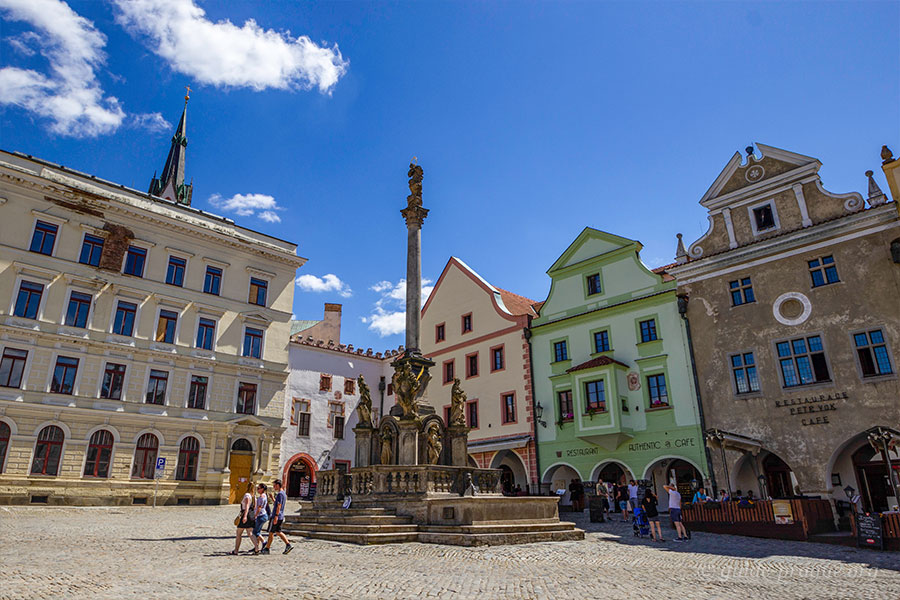
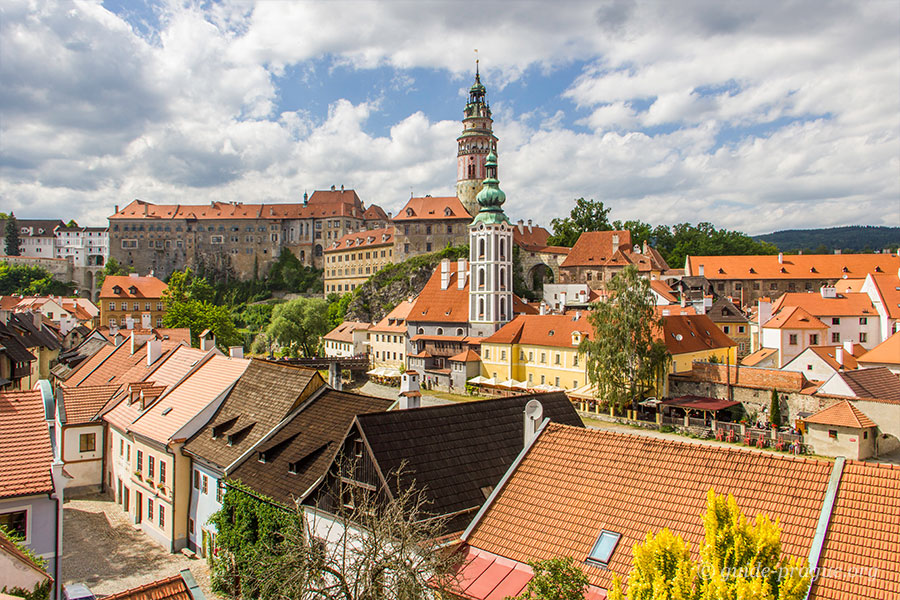
Not far from the Austrian borders, 180 kilometers from Prague, you can find one of the most beautiful towns in the Czech Republic. Its name is Český Krumlov. There is a majestic medieval castle on one hill and the Gothic church of Saint Vitus on another. Between them, you will find a maze of streets with cobblestones and old houses. The river Vltava and the foothills of Šumava Mountains make this town even more picturesque. |
|
How to Get to Český Krumlov from Prague?BusesThe easiest way to get to Český Krumlov from Prague is by bus. The journey takes a little less than 3 hours, and the approximate cost of a round-trip ticket is 20 euros. The biggest bus carriers in the Czech Republic are RegioJet and FlixBus. You can compare all offers for the specific day and buy your ticket at omio.com. |
|
|---|---|
TrainsYou can also get to Český Krumlov by train. The journey takes the same 2.5-3 hours and will cost about 25-30 euros for a round trip. You will have to change trains in the city of České Budějovice, though. |
|
|
|
CarIf you travel by car, you can choose between two routes from Prague to Český Krumlov — via Pisek or Tabor. If there are no traffic jams, the second option is slightly faster. But the first one is a little more picturesque. By the way, whichever road you choose, in both towns you can make a stop for a coffee and a short walk. In Pisek, there is the oldest stone bridge in the Czech Republic, built in the 13th century. And if you are interested in the history of the Hussite movement, choose Tabor. However, you will likely enjoy it even if the topic does not interest you much — the town is lovely. |
|
Keep in mind that the entire center of Krumlov is a pedestrian zone. You have to park your car in one of the parking lots for visitors marked with codes P1 - P5. Pay attention to the town's electronic navigation system. It will show you where there are vacant places. The cost of parking is 50 CZK per hour (approximately 2 euros). |
|
ToursAnother option is to book a private tour from Prague to Český Krumlov or join the group trip. You can explore available offers and make your reservation via GetYouGuide.com. |
|
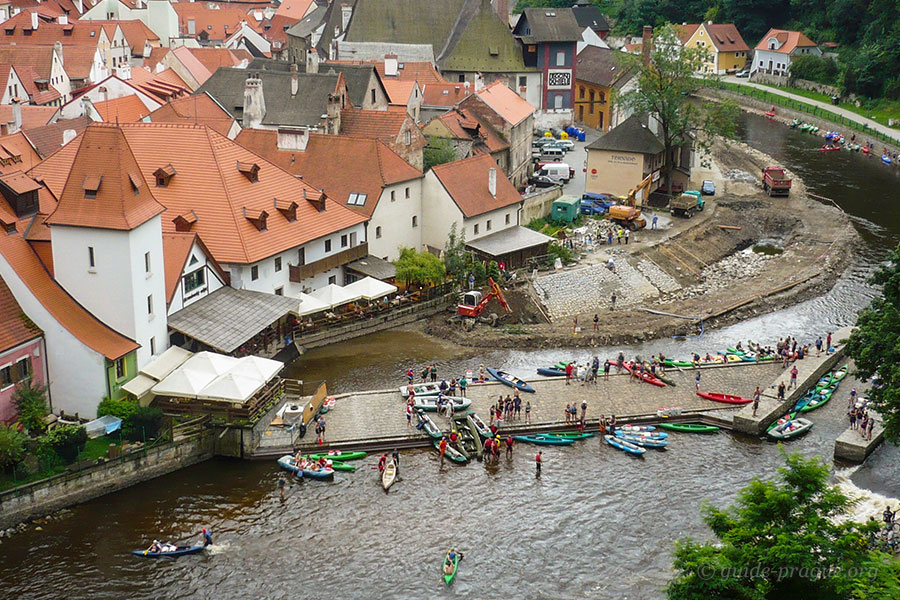
The Best Time to Visit Český KrumlovČeský Krumlov is impressive at any time of the year. Most visitors come during the main season — from April to October. And during summer, there are also many raft and canoe enthusiasts as the Vltava River around the town is incredibly scenic. |
|
|
|
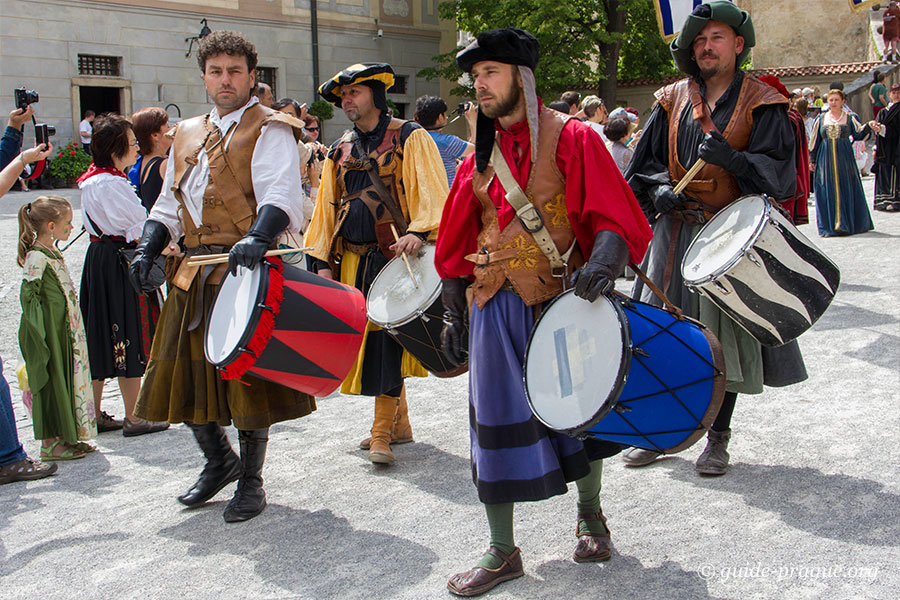
Those who are interested in historical festivals should not miss the Five-Petalled Rose Celebrations held in June. It is dedicated to the era of the reign of the last Rosenbergs. Theatrical performances, costume processions, tournaments between knights, and markets occur all over the town. You have to pay for entering Krumlov during the festival. The entrance fee is usually about 13 euros. However, if you wear a historical costume, the entrance is free. |
|
From November to March, there are far fewer tourists. But unfortunately, the castle interiors are closed over this period. Keep that in mind when planning your visit. During Advent, Český Krumlov is magnificent. There is a Christmas market in the main square, and many come to enjoy the festive atmosphere. |
|
|
Whichever season you choose, try to find time to stay in Krumlov for a couple of days. You will not regret it. The town is gorgeous at night. And besides, you will have more time for sightseeing, visiting museums or taking a raft ride on the Vltava. Find the perfect place to stay on Booking.com |
|
History of Český KrumlovThe name Krumlov probably comes from the German expression "Krumme Aue" — crooked floodplain. And we must say, it describes the local landscape accurately. |
|
|
|
Archaeological research confirms that this area was inhabited as early as the Old Stone Age. But the town was first mentioned in documents only in 1253. It was established in two stages. First, the Castle and Latran appeared. But as there was not enough space between the castle and the river, another settlement with a big rectangular square in the center was built on the opposite bank. And in the 14th century, both parts of the town were surrounded by fortress walls. |
|
In those distant times, Krumlov belonged to the Czech family called Vitkovci. And then, from 1306 to 1601, Rosenbergs owned it. These three centuries are considered to be the period of the town's highest prosperity. New houses were built, monasteries and churches were founded, and a large fair was held twice a year. Gold and silver were mined nearby. Rosenbergs even minted their own coins. Today we can still see a red five-petalled rose on many houses. It is the coat of arms of this Czech family. |
|
|
The last of the Rosenbergs, Peter Vok, sold the Krumlov estates to Emperor Rudolf II in 1601. Later, in 1622, it passed into the possession of the House of Eggenberg, and three generations of the family lived in the town until 1719. Johann Christian of Eggenberg was an avid fan of music, dance, and drama. He ordered the construction of a theatre in the castle. And today, this is one of two well-preserved baroque theatres in the world. Another can be found in Swedish Drottningholm. |
|
|
Johann Christian and his wife Maria of Schwarzenberg had no children. The family died out, and their heirs, the Schwarzenbergs, came to Krumlov and stayed there until 1947. |
|
|
|
The rapid development of industry in the 19th century bypassed the town. And it kept its medieval character even in the 20th century. In 1992 Český Krumlov was included in the UNESCO World Cultural Heritage List. |
What to See in Český Krumlov |
|
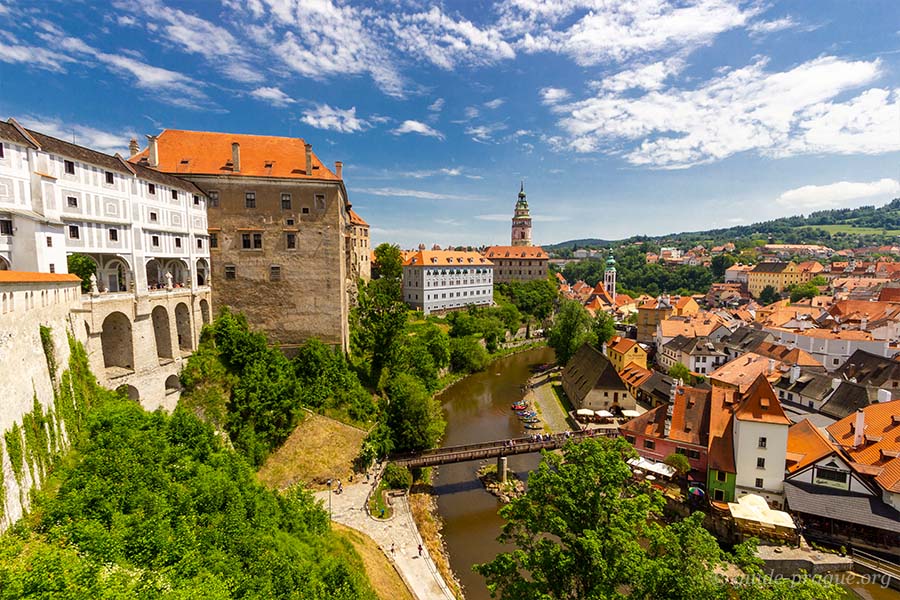
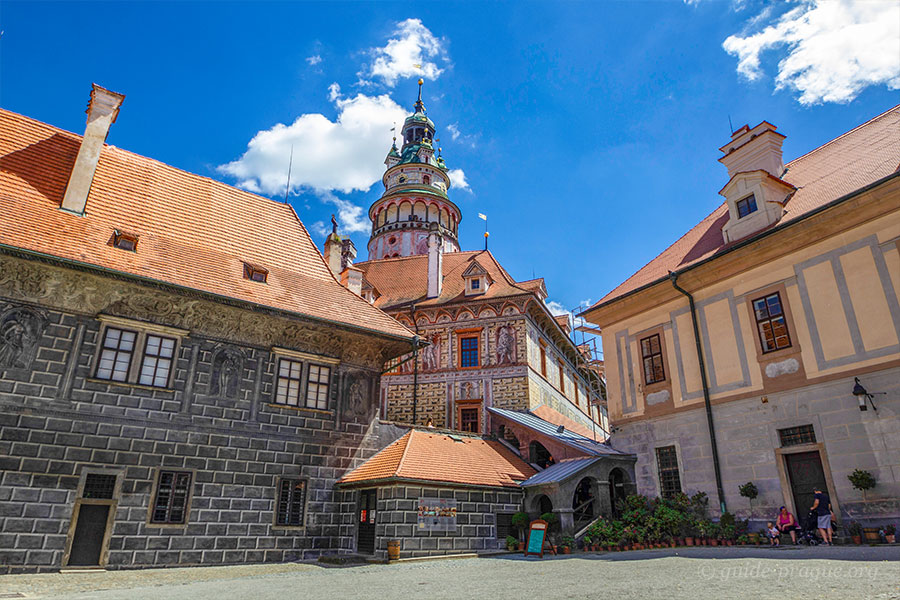
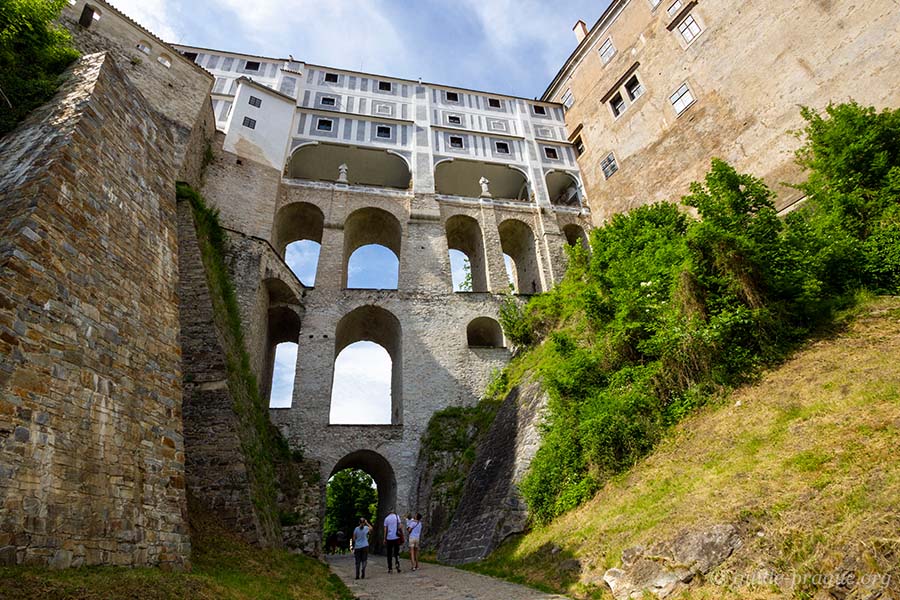
Castle and Cloak bridgeThe castle complex in Český Krumlov is the second largest in the Czech Republic. (Prague Castle is the largest.) Almost four dozen buildings stretch for a kilometer on the high cliff above the Vltava River. You can walk through the courtyards and the so-called Cloak bridge free of charge and at any time of the year. |
|
|
|
From April to October, there are also tours inside. You can choose among several options: visiting Renaissance and Baroque halls, visiting the halls from the 19th century, or visiting the Baroque theater. Entrance tickets cost about 7-10 euros, depending on your choice. More information on opening hours and ticket prices can be found on the official website of the castle. |
Castle Gardens and Revolving TheatreJohann Christian of Eggenberg founded the castle gardens in the 17th century. Most likely, the creators looked for inspiration in Viennese Schönbrunn and Belvedere. The park is 150 meters wide and 750 meters long. It is divided into two parts. The one closest to the castle is of the French style, with beautifully trimmed hedges, ornamental flower beds, and a magnificent Rococo cascade fountain. The second part is of the English style and looks more like a forest. |
|
|
|
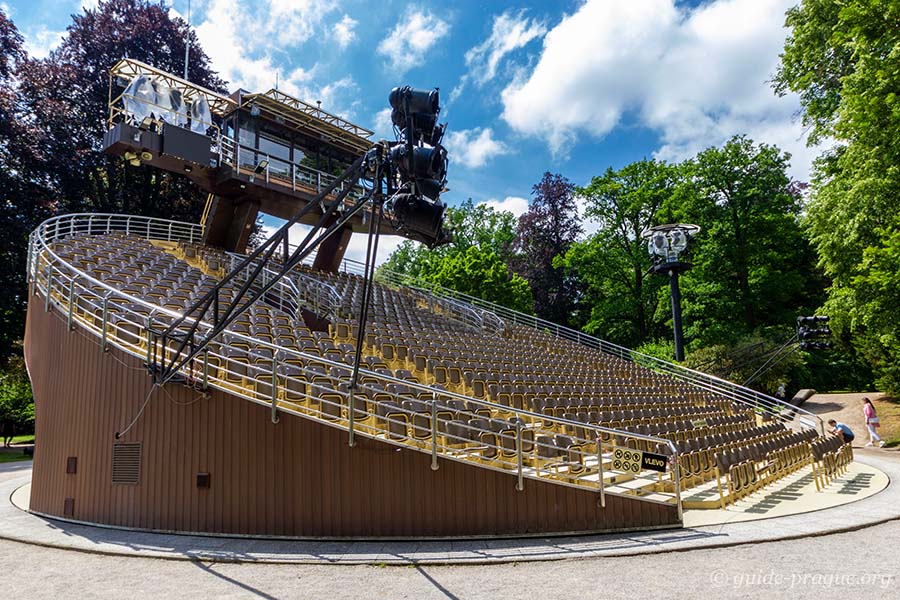
There is another unique attraction hidden among the trees — the revolving theatre. In the summertime, performances take place here. There is no stage as such. The sceneries are set on different sides of the audience, and the auditorium turns as needed. The revolving theatre was built in the 1950s. And for many years now, UNESCO criticizes such an addition to the baroque garden and requires its removal. But so far, it is still there. |
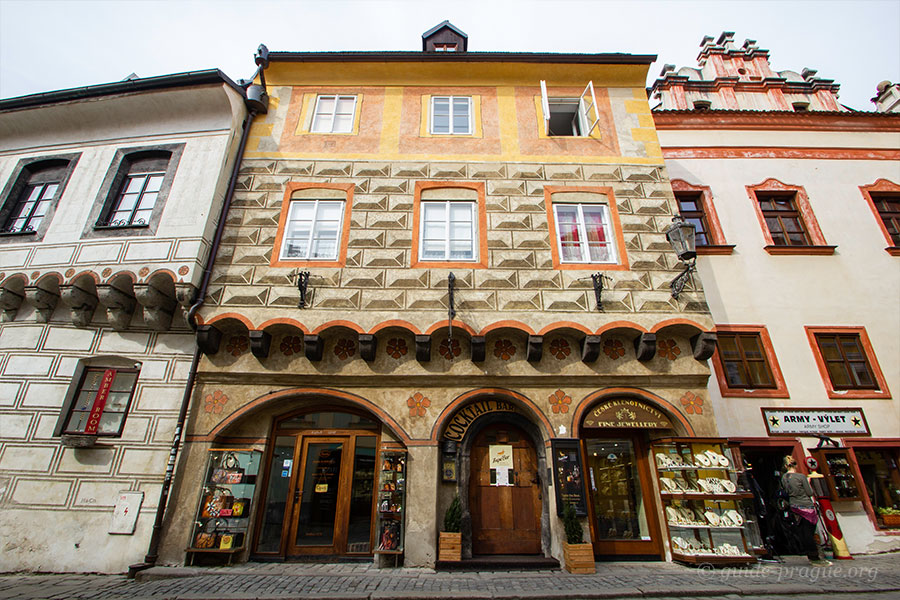
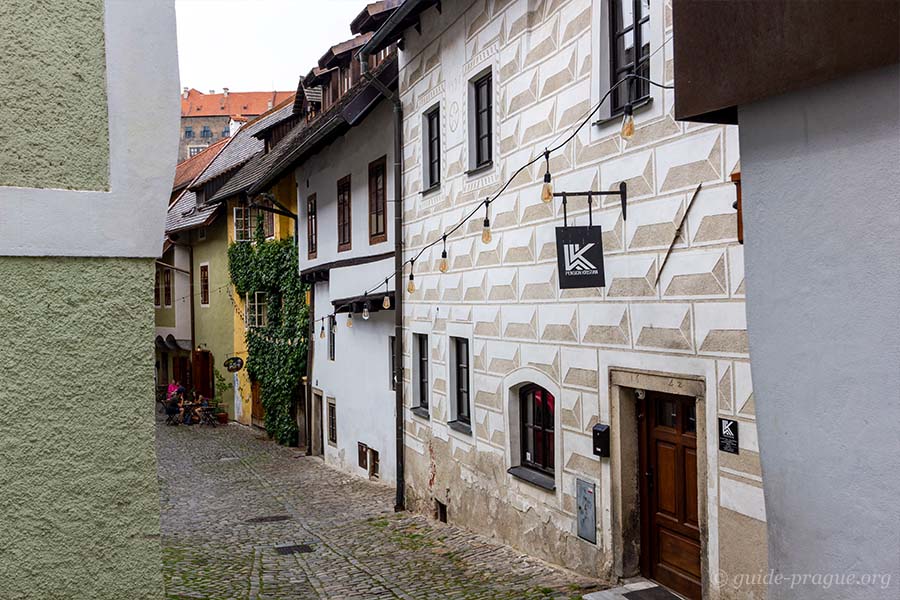
LatranLatran is the oldest part of Krumlov. Here you can see the only preserved part of the old fortifications — the Budejovice Gate. All other gates and walls were demolished in the 19th century. Also, be sure to stroll through the courtyards of the former monasteries of the Clarisses and Minorites. If time permits, visit exhibitions about the life of ordinary people and the nobility or about art in monasteries. Look at the Gothic and Renaissance buildings in the street. Notice house number 6 — the former church of Saint Jost from the 14th century. The temple was decommissioned in 1787 and used as an apartment building. But the tower was preserved, though. |
|
Old TownAfter crossing the wooden bridge over the Vltava River, you will find yourself in the Old Town. The river itself determines the quarter's borders. In the place where the Upper Gate used to stand, a meander begins. The river goes around the Old Town and returns almost to the very same spot. This place is called Myší díra — “Mouse Hole”. |
|
|
|
Here are some tips on what you should see in the Old Town of Krumlov:
|
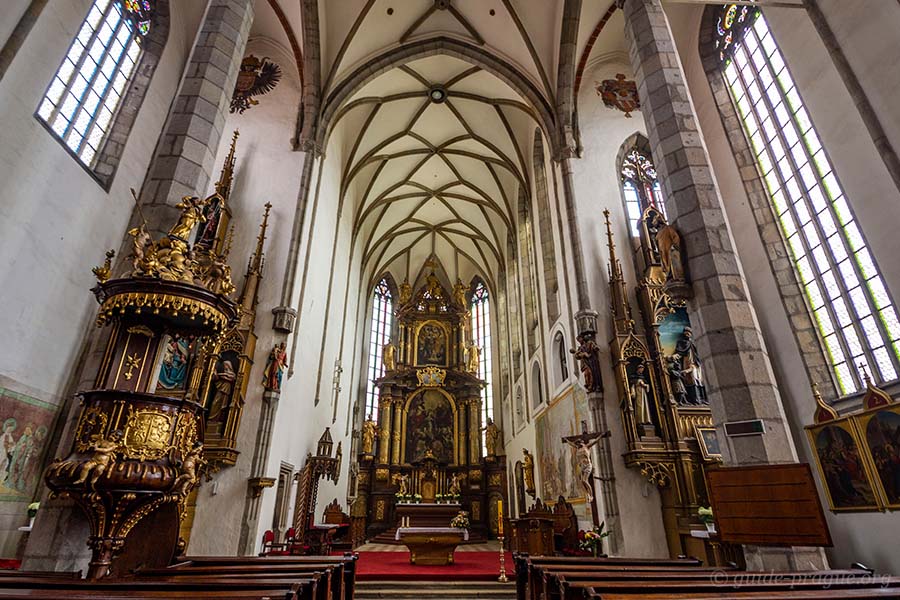
Saint Vitus Church and Horní StreetThe Gothic church of Saint Vitus was built in 1407-1439. Inside, you can see the Late Gothic vaults and paintings from the 15th century. There are also gravestones of Vilem of Rosenberg and his third wife, Anna Maria of Baden, at the left wall. Do not miss a small but beautiful Baroque organ above the entrance. There is also another larger organ in the church. It was created in the New Gothic style in 1908. The chapel of Saint John is from 1726. The hearts of some Schwarzenbergs are kept here. |
|
|
|
After visiting the church, be sure to walk up Horní Street. The observation deck near the Regional Museum offers a breathtaking view of the town, the river, and the castle. And a little higher is the so-called Mouse Hole, where the Vltava meander begins. You can rent a raft or canoe to admire Krumlov from the water or take an excursion on a wooden boat there in summer. |