|
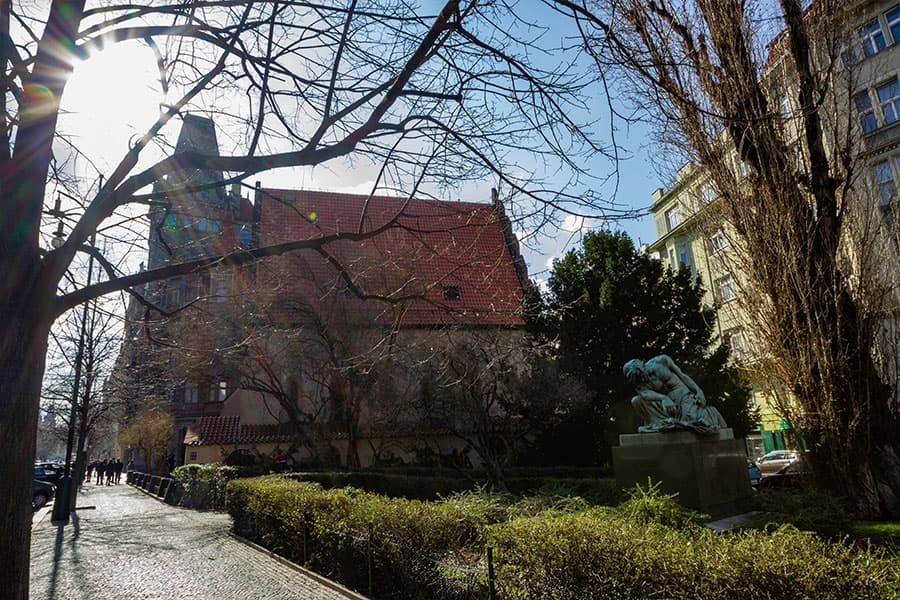
From its earliest history, Prague has been a multicultural city. In 12th-century Czech chronicles, prosperous Jewish settlements are described near Prague Castle and Vysehrad. However, due to frequent attacks, local Jews had to look for refuge near the main Prague ford. Jews were permitted to settle only within a strictly designated area — the ghetto. And this is how the Jewish Quarter appeared. |
|
|
|
The golden age of Prague’s Jewish Ghetto came during the Renaissance. At that time, Mordecai Maisel lived here. TThis immensely wealthy and influential man financed the paving of streets. He helped schools and hospitals, built a town hall, and the biggest synagogue in Prague. At the same time, Judah Loew ben Bezalel served as Prague’s chief rabbi. According to the legend, it was he who created Golem from clay. |
|---|---|
|
Over time, the number of residents in the ghetto increased, but the territory remained the same. Each free spot was built up. All kinds of extensions and superstructures appeared on the houses. In the 18th century, allowed Jews to settle freely outside the ghetto. However, this did not improve living conditions — wealthier residents moved away while the poorest remained. |
|
| From 1850 the Jewish Quarter of Prague bears the name of Joseph II - Josefov. And in 1855, Town Hall approved the plan of cleaning this part of Prague. Most of the buildings were destroyed, and many streets disappeared from the map. New houses in historicist and Art Nouveau styles were built. The new streets appeared. All that remains from the old Jewish Quarter are six synagogues, Old Jewish Cemetery, and a Jewish Town Hall. Prague Jewish Museum was founded in 1906. Its purpose was to depict the history of Jews in the Czech lands. |
|
|
During World War II, the Nazis brought to Prague items from Jewish houses, synagogues, schools all over the Czech Republic. After the liberation, there was almost nobody to claim the confiscated objects. More than 80,000 Jews became victims of the Holocaust. These collections are now housed in the Jewish Museum in Prague, one of the world’s richest museums of Jewish culture. There are more than 40,000 different exhibits: Torah scrolls, ritual objects, household items, and books. The museum's library contains over 100,000 volumes, including many valuable manuscripts. Information on opening times and admission fees can be found on the museum's official website. |
|
|
If you want to make the most of your visit to Prague, there are plenty of exciting activities and tours to explore the city’s history, architecture, and culture. From guided walking tours through the Old Town to boat trips along the Vltava River, you can discover hidden gems and iconic landmarks. Check out a curated selection of top Prague experiences on the GetYourGuide platform to plan an unforgettable trip. |
|